What is Terahertz? Frequency, Wavelength and the “Light of Life”
Terahertz waves sit between millimetre waves and infrared, commonly defined as 0.1–10 THz with wavelengths of about 3,000–30 µm. This article explains the science and its role in wellness technology.
Scientific definition
Scientific sources define terahertz radiation as electromagnetic waves of roughly 0.1–10 THz, corresponding to wavelengths from 3,000 µm (3 mm) to 30 µm — between millimetre waves and infrared. Some references describe the band as 30 µm to 3 mm.
THz waves are non-ionising, with lower photon energy than X-rays, and can penetrate some non-metallic materials — which is why they are studied for imaging, security and spectroscopy.
Why “the light of life”?
“Light of life” is a marketing phrase used in wellness and beauty technology to describe how terahertz waves interact with biological tissue. Scientifically, THz spectroscopy is sensitive to molecular vibrations and hydrogen bonds, and is studied for biomedical applications (e.g. a 2023 PMC review on head and neck uses).
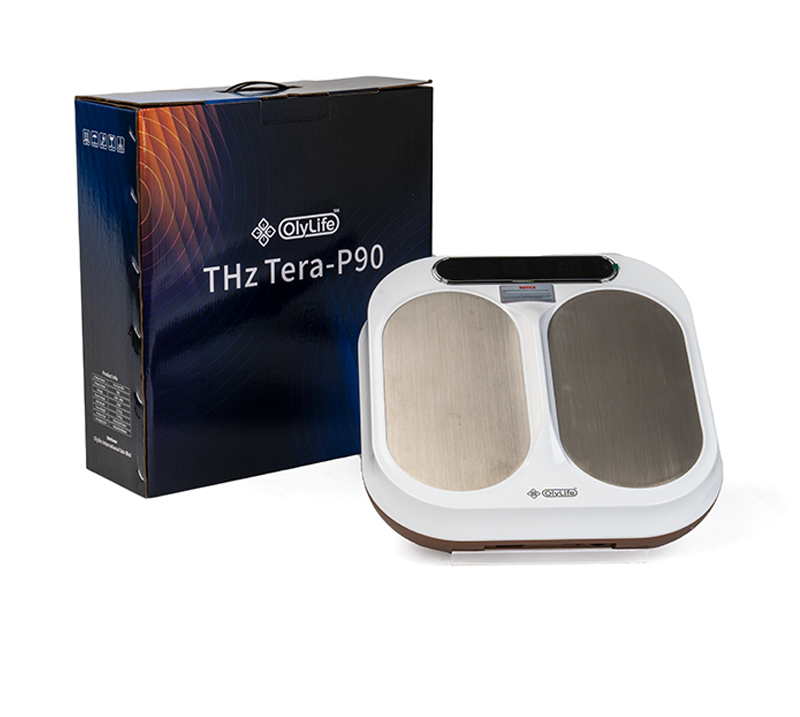
Consumer devices such as the OlyLife Tera-P90 series state an 8–1000 µm band. It is important to understand that a stated wavelength range is not the same as clinical efficacy; individual results vary.
Frequently Asked Questions
Is terahertz radiation harmful?
THz radiation is non-ionising with photon energy far below X-rays, and consumer devices typically operate at low power. Long-term high-intensity exposure is still being studied, so follow product instructions.
Sources & further reading
- Wikipedia — Terahertz radiation
- ScienceDirect — Terahertz Radiation overview (0.1–10 THz)
- PMC — Terahertz technology in head and neck applications (2023)
This article is for general information only and is not medical advice. Always consult a qualified professional for health concerns.